The Database Stack Has Changed. Why Are We Still Using Database Tools Built for 2010?
Most engineering teams don’t rely on a single database anymore. Modern stacks are a mix of specialized systems: Postgres for transactions, Redis for caching, Elasticsearch for search, Neo4j for relationships, object storage for files, and vector databases for AI. The hard part is managing them all.

Most engineering teams don't work with just one database anymore.
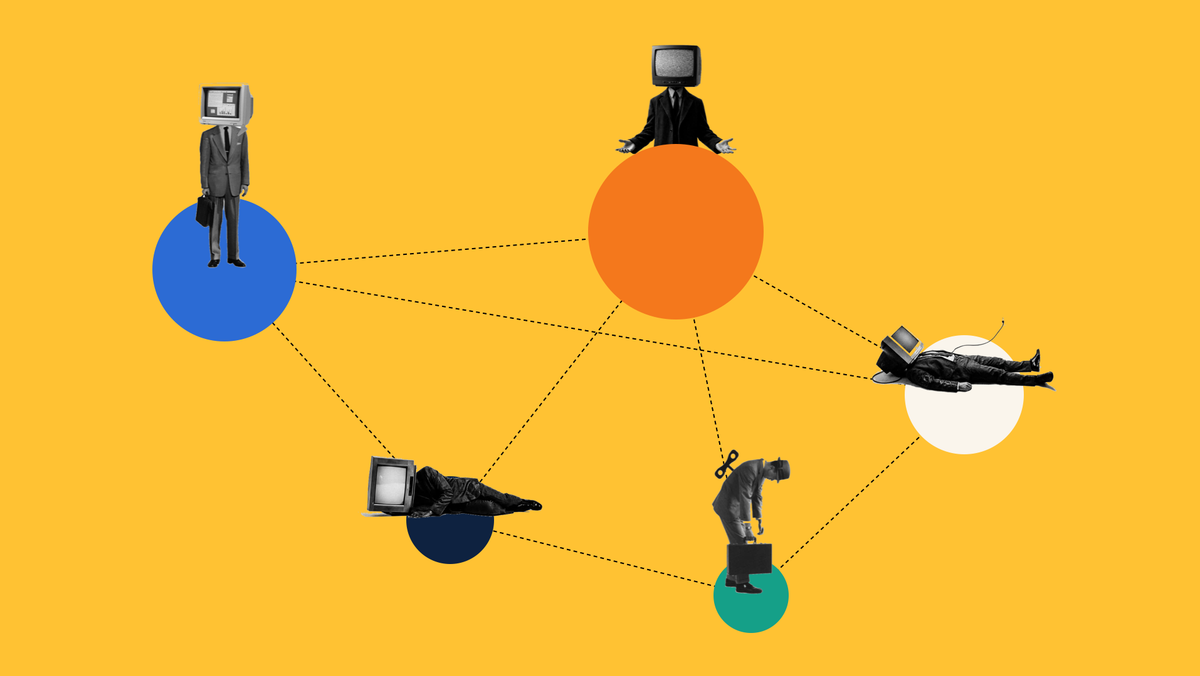
Instead, modern infrastructure relies on a patchwork of specialized systems: PostgreSQL might power transactional workloads, Redis handles caching, Elasticsearch is used for search, Neo4j models relationships, object storage manages files, and vector databases enable AI applications.
Each technology exists because it's optimized for a specific purpose.
The challenge is managing all of them and the tools that developers use for that haven't kept up.
Every Database Comes With Its Own Explorer
Every database ecosystem has its own preferred management tool. Need to inspect PostgreSQL? Open pgAdmin. Working with MySQL? MySQL Workbench. Managing MongoDB? MongoDB Compass.
Graph databases, Redis, vector databases, and cloud-native services each introduce another interface, another installation process, another authentication flow, and another way of navigating data.
Individually, these tools work well. Collectively, they create operational friction.
As organizations adopt more specialized databases, developers spend increasing amounts of time switching between tools instead of understanding their data.
AI Didn't Really Solve This Problem
The latest generation of AI-powered database tools has made querying easier.
Natural language can now generate SQL, explain complex queries, suggest optimizations, and debug syntax errors. These capabilities are valuable, but they solve a relatively narrow problem.
Most AI database tools assume your data exists in a relational database. This is simply not the case for modern systems.
Today's production environments combine SQL databases with document stores, graph databases, vector databases, caches, object storage, event streams, and other specialized systems. Generating SQL helps with one slice of that ecosystem, but it does not help engineers navigate relationships across multiple data sources.
The challenge has shifted from writing queries to understanding distributed data.
The Problem Is Fragmentation
As infrastructure grows, so does fragmentation. Different databases expose different interfaces. Different teams adopt different tools. Different deployment models introduce different operational workflows.
Even something as simple as investigating an incident or understanding a customer record can involve switching between multiple tools before the full picture emerges.
The complexity comes from the lack of a unified way to explore databases.
Understanding Data Matters More Than Querying It
Writing SQL is not the bottleneck, understanding how data fits together is.
Questions often look like this:
- Which service owns this data?
- How are these collections and tables related?
- Where did this record originate?
- Which downstream systems depend on it?
- What changed between these environments?
- Which experiment generated these results?
Answering these questions requires context that is found by exploring relationships across multiple systems, not just generating another SQL query.
A Better Approach Is a Unified Data Explorer
Instead of learning a different interface for every database, imagine working with one consistent experience regardless of where your data lives. That is the idea behind WhoDB.
WhoDB is an open-source database explorer designed for modern data infrastructure.
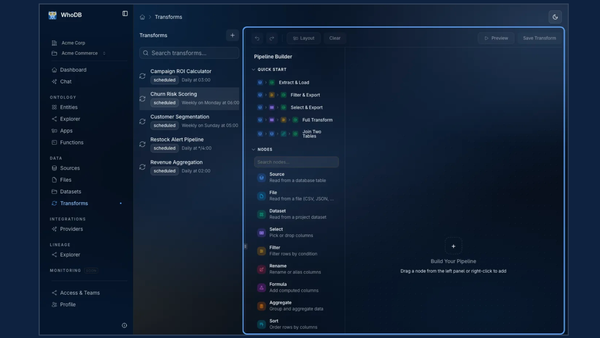
It connects to multiple data sources through a single interface allowing teams to browse schemas, understand relationships through graph visualizations, perform CRUD operations, and explore data without constantly switching between tools.
Because it's lightweight, it can be deployed in minutes using Docker. Because it's embeddable, software companies can integrate it directly into their own products. Because it's self-hosted, organizations can maintain complete control over their infrastructure.
AI That Stays Inside Your Infrastructure
As AI becomes part of everyday developer workflows, another challenge has emerged: data governance.
Many AI-powered tools require sending metadata, or sometimes the data itself, to third-party services.
For organizations handling sensitive customer, financial, healthcare, or proprietary business data, that's often not an acceptable tradeoff.
WhoDB takes a different approach.
Natural language querying happens within the deployment environment, allowing teams to ask complex questions about their data without moving it outside their infrastructure.
That means organizations can benefit from AI-assisted exploration while maintaining their existing security and compliance requirements.
Built for the Way Modern Data Works
Modern workflows are becoming more distributed. Organizations continue adopting new databases, specialized storage engines, AI infrastructure, event systems, and cloud-native services as their products evolve.
The number of databases will grow. Developers shouldn't need a new explorer for every one of them.
A unified way to understand data, regardless of where it lives, is a better approach to database management.
That's what WhoDB is being built for.