
WhoDB
Your Retail Data Has Tables. Your Business Has Relationships.
Retail data relationships link products, categories, stores, inventory, sales, and customers. Learn how to turn tables into business meaning.


WhoDB
Retail data relationships link products, categories, stores, inventory, sales, and customers. Learn how to turn tables into business meaning.
WhoDB
A semantic ontology gives your data shared, plain-language meaning. Learn what it is, how it connects business concepts, and why non-technical teams should care.
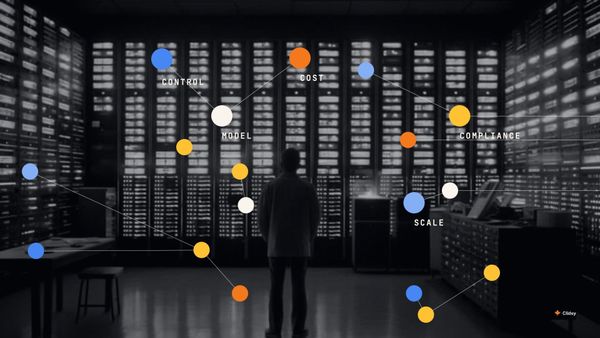
A plain comparison of self-hosted vs. cloud data warehouses across cost, control, compliance, and scale, so you can match the model to your team's actual constraints instead of the industry default.

WhoDB
Data lineage tells you where data came from, how it changed, and where it went. Here's what data lineage actually means, with a real example.
WhoDB
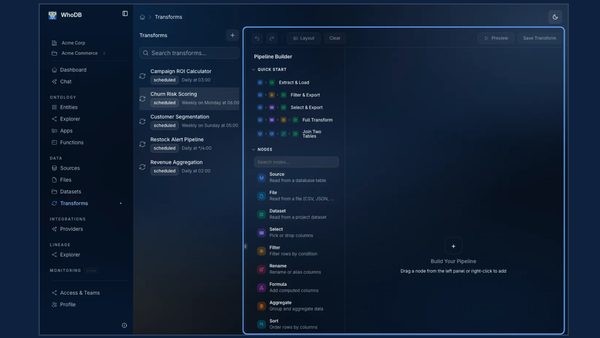
Why WhoDB replaced handwritten SQL with a visual data pipeline builder. Faster ETL, fewer errors, and pipelines anyone on the team can read.

WhoDB
What happens when a company's entire pricing logic lives in one spreadsheet nobody fully trusts anymore? We rebuilt it from the ground up.

WhoDB
The hidden cost of a fragmented data stack isn't infrastructure. It's the decisions you never make.

The conversation around sovereign AI is getting louder. Here's what it actually requires, from someone building the infrastructure behind it. By Anguel Hristozov, Co-founder & CTO, Clidey