What Data Lineage Actually Means (And Why It Matters)
Data lineage tells you where data came from, how it changed, and where it went. Here's what data lineage actually means, with a real example.

What Data Lineage Actually Means
Ask a data team where a number on a dashboard actually came from, and you'll usually get a shrug, a Slack search, or a call to whoever wrote the pipeline two years ago. Data lineage exists to replace that scramble with an answer you can directly access.
What It Actually Tracks
Data lineage is the record of where a piece of data started, what happened to it along the way, and where it ended up. It answers a narrower, more useful question than an architecture diagram does: which table, which transformation, and which report produced this exact number.
At a minimum, it tracks:
- Where the data originated: a source table, file, or API
- Every transformation it passed through on the way
- Where it landed: a dataset, dashboard, or model
- Who accessed it, and when
Why It Beats an Architecture Diagram
An architecture diagram shows which systems talk to each other. Data lineage shows which specific field fed which specific output, down to the column level. That distinction matters the moment something breaks. Without it, tracing a bad number back to its source usually means reading old SQL, pinging engineers, and hoping someone remembers what changed. With it, the answer is a few clicks away instead of a few days of digging.
A Simple Example
Take a straightforward pipeline: an orders table in PostgreSQL, transformed daily into an aggregated revenue dataset, then mapped to a "Revenue" entity that the finance team checks every morning. Data lineage traces the full path, source, transformation, dataset, and business entity, so if that daily number looks wrong, you know exactly which step to check instead of guessing at every layer of the pipeline.
Lineage and Governance
Regulators, auditors, and internal compliance teams keep asking versions of the same question: where did this data come from, and who has accessed it since? Good lineage turns that into a lookup instead of an investigation. That matters most for PII, where you need to trace exactly which fields flow through which transformations and who could see them along the way. Teams that skip this usually find out the hard way during an audit, not before one.
How WhoDB Tracks Data Lineage
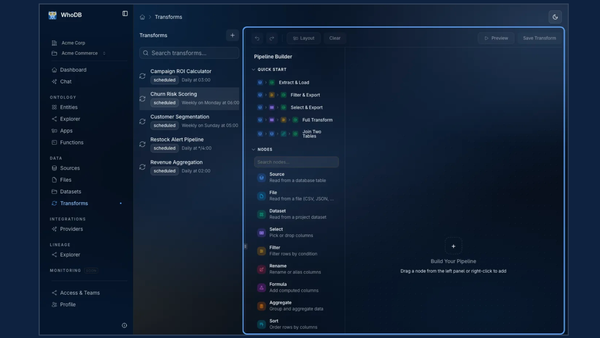
WhoDB builds a lineage graph across the full path: source, dataset, transform, and ontology entity, all in one interactive view. You can trace what breaks if a column changes, follow PII through every transformation, spot dead pipelines feeding nothing, and pull a full audit trail of who changed what and when.
Data lineage stops being a diagram nobody opens once it's tied to the pipelines your team runs every week. That's what makes it useful instead of decorative.